A tagline is not a slogan


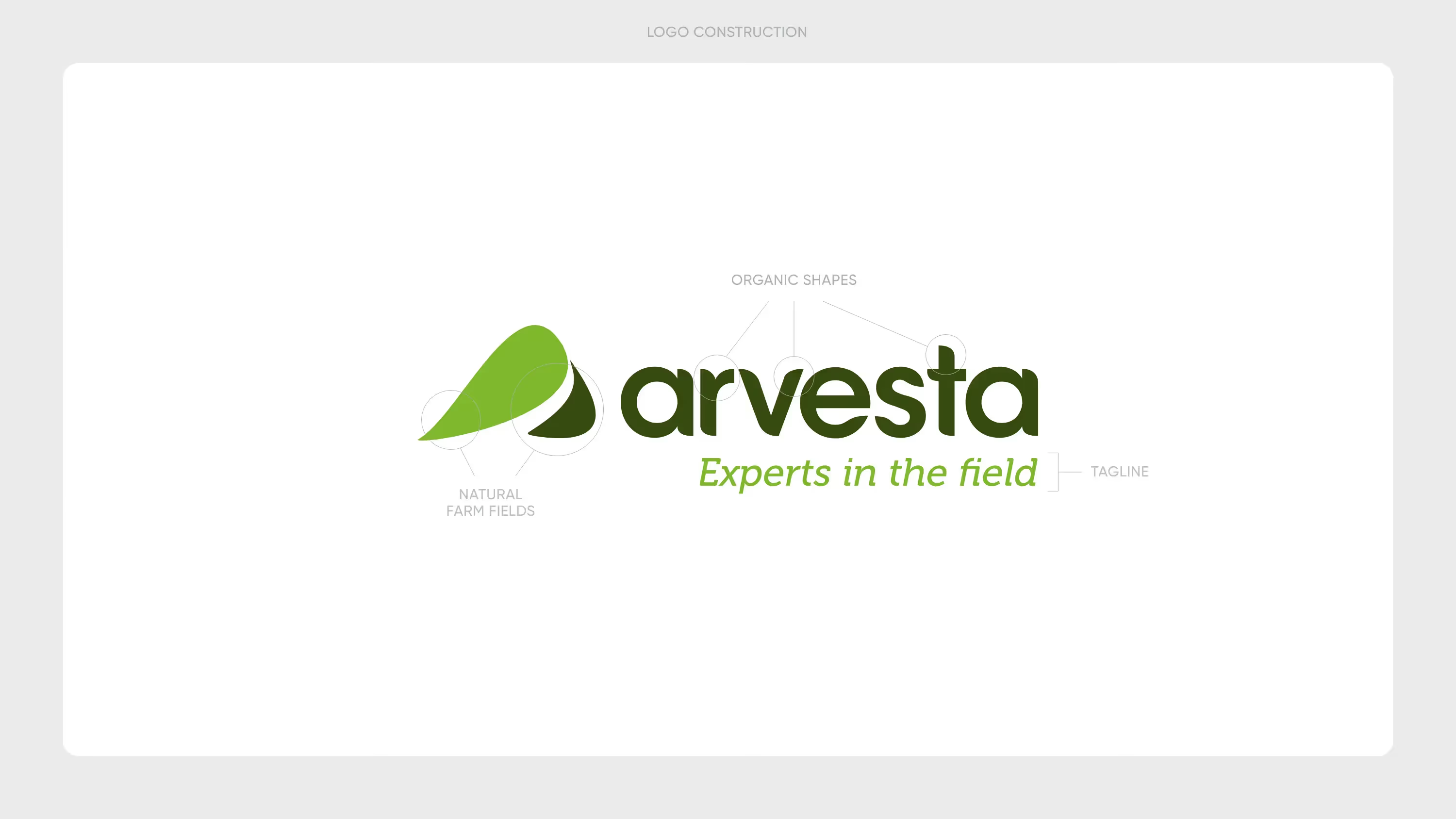
Arvesta uses “Experts in the field.” Coca-Cola launched “Taste the feeling.” Both lines can appear alongside a logo and both are baselines. Yet they play fundamentally different roles.
That distinction matters more than the terminology suggests. A descriptor, tagline and slogan each require a different balance of clarity, meaning and creativity. They also have a different lifespan and legal position. Treat them as interchangeable, and temporary campaign communication can easily be managed like a structural brand element.
A baseline can play three different roles
Baseline is the umbrella term for the verbal addition used alongside a brand or logo. Within that category, we distinguish between a descriptor, a tagline and a slogan.
A descriptor primarily explains what a company does. It is particularly useful when the brand name itself reveals little about the activity. For Equitone, for example, we developed “Fibre cement facade materials”. The name can build brand value in its own right, while the descriptor immediately clarifies the category in which the brand operates.
A tagline combines that clarity with an additional layer of meaning. It says something about the activity and about how the brand wants to position itself. “Experts in the field”, which we developed for Arvesta, does exactly that. “Field” connects the line to agriculture, while “Experts” reinforces Arvesta’s position as a knowledge partner.
A slogan has a much more temporary role. It is developed for a specific campaign or activation and can sit alongside an established descriptor or tagline. Coca-Cola’s “Taste the feeling” is one example.
Function determines how long a baseline should last
The difference becomes most visible when a brand starts to change.
A descriptor or tagline is generally connected to the brand structurally. Consistent repetition allows such a line to build recognition and, over time, brand value. A slogan moves more quickly with campaigns and communication.
Yet a slogan can also become much more deeply embedded than originally intended. In May 2025, Dovy Keukens replaced “Wij maken uw keuken in België” with “Echt Belgisch”, only to return to the familiar line less than a year later. A communication element repeated long enough can become a recognisable brand asset in its own right.
That is why the original role matters. It determines how much freedom a company retains to change a baseline later.

The strongest taglines balance explanation and distinction
This logic is closely connected to how we approach naming. Brand names sit on a spectrum from descriptive to associative and fanciful. The more distinctive a name becomes, the more independently it can often function and the stronger its potential for legal protection. At the same time, it usually explains less about what the company actually does.
A baseline can add that missing context.
Impermo reveals little about the activity on its own. “Tegels, natuursteen, parket” directly fills that gap and therefore functions as a descriptor.
Arvesta asks more of its line. “Experts in the field” clarifies the context while also reinforcing the brand’s positioning. That combination is where a tagline creates value: descriptive enough to provide meaning, distinctive enough to build something of its own.
The distinction also matters legally
The same balance has consequences for legal brand protection. A purely descriptive descriptor generally has little distinctive character, which limits the scope of legal protection available.
A tagline adds a meaningful or creative element to that description. The stronger its distinctive character, the stronger its potential trademark position. Language also becomes important internationally: a strong tagline cannot simply be translated word for word without checking whether its meaning, distinctiveness and legal availability still hold in another market.
For slogans, copyright may also become relevant alongside trademark law when the specific wording is sufficiently original. Because earlier copyright is not visible in a central trademark register, prior-rights research remains important. Slogans intended for longer-term use should therefore also be treated as potential brand elements for which trademark registration may be relevant.
A few words can carry years of brand value
Descriptors, taglines and slogans can occupy exactly the same visual position. Their role is different.
A descriptor creates clarity. A tagline connects clarity with positioning. A slogan gives a campaign a temporary layer of meaning. All three are baselines, but their function determines how they should be developed, used, translated, protected and ultimately changed.
A few words beside a logo may look like a detail. Once people begin to associate them with the brand, they are no longer one.

.webp)