Since 1717? When heritage becomes misleading

In the luxury sector, a brand sometimes sells more than the product. Craftsmanship, tradition and heritage often form part of its appeal. But how far can a brand go in putting that past forward?
In a recent judgment, the Court of Justice made clear that a historical date in a trademark is not neutral. When such a date is understood as a founding year and wrongly evokes centuries of knowhow, quality and prestige, the trademark may be misleading.
A historical date in a trademark can be misleading when consumers understand it as evidence of continuity, craftsmanship or quality that is not supported by the actual history of the company.
A luxury house with an interrupted history
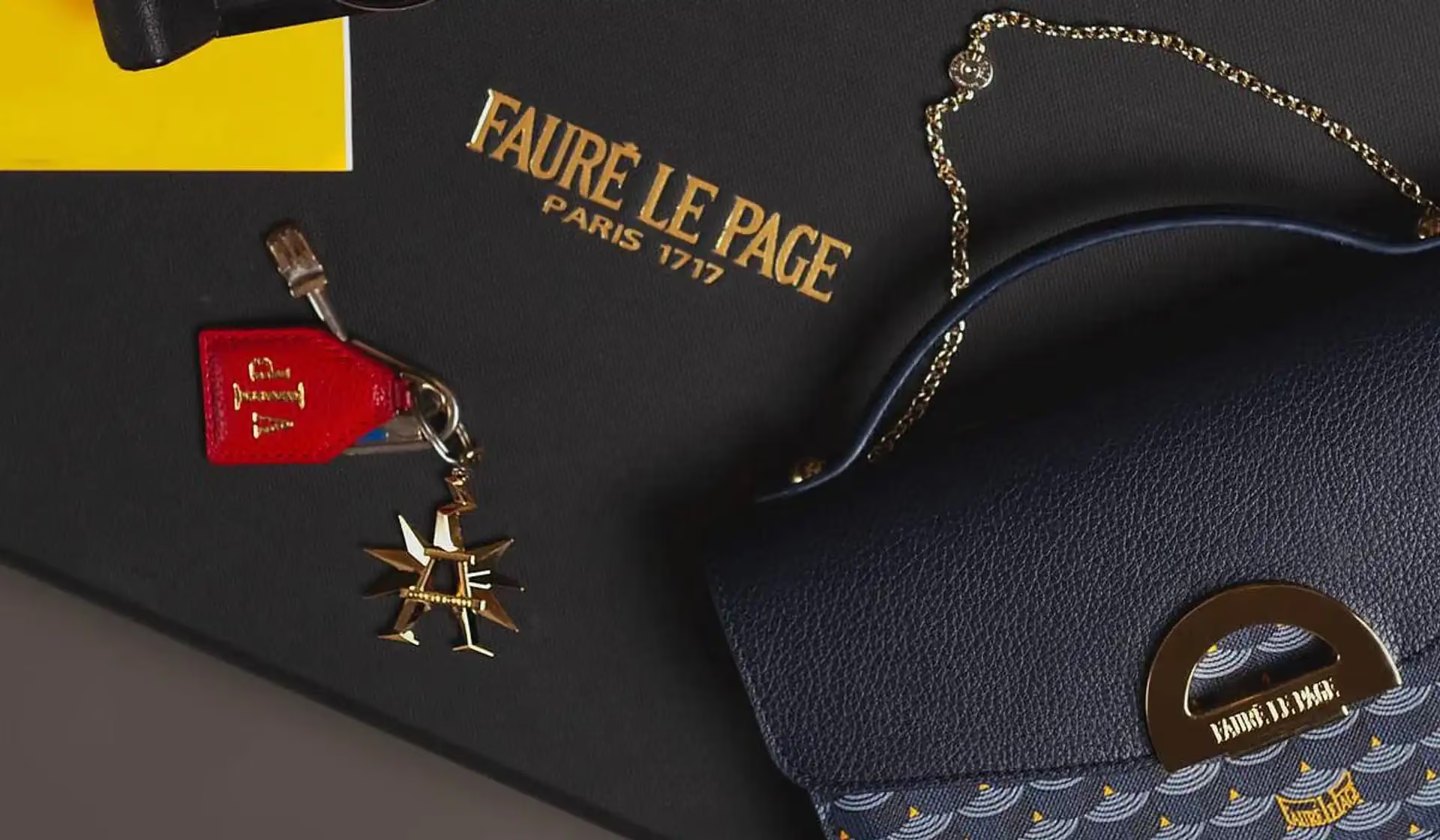
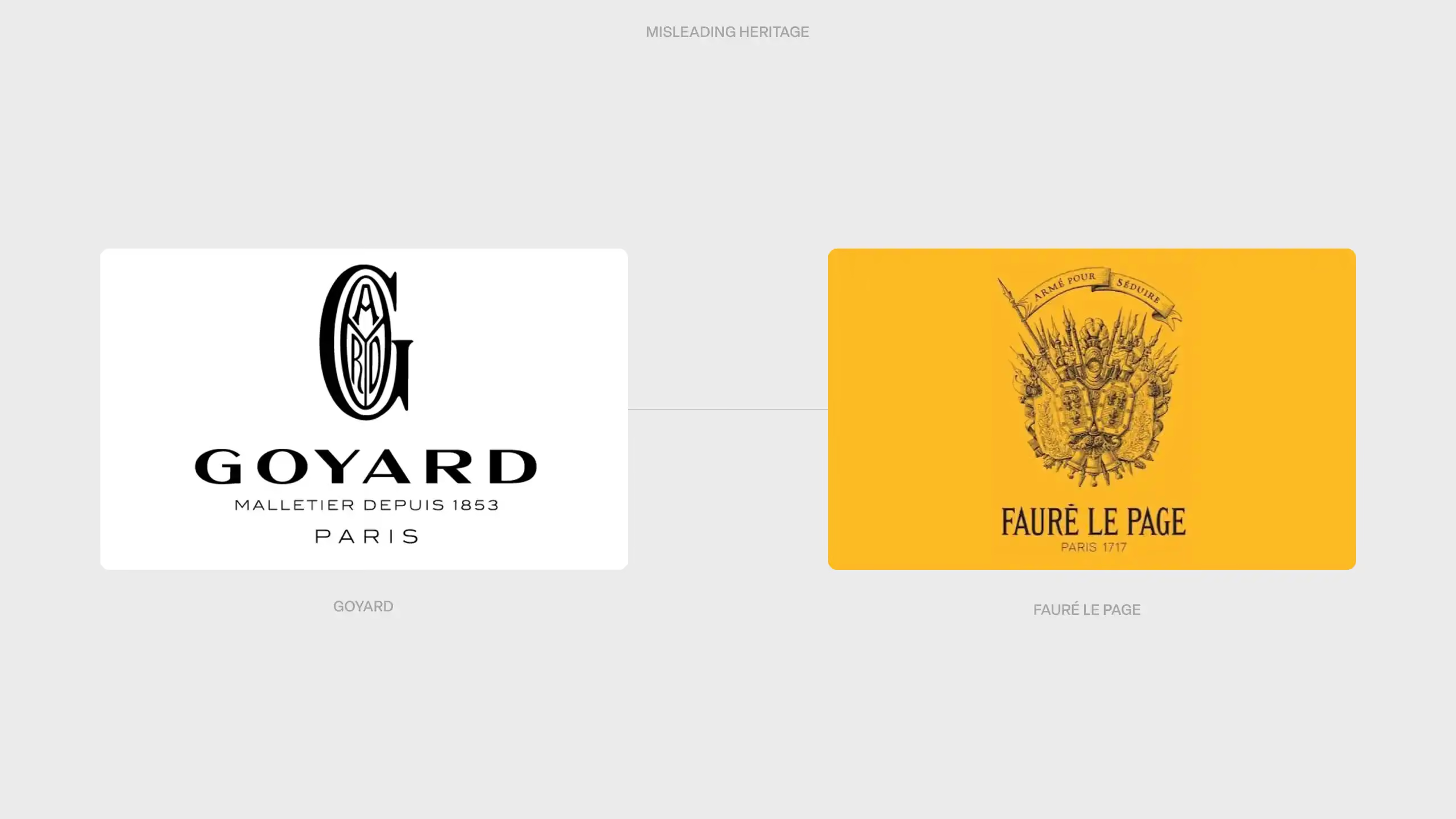
The case concerned the trademark “Fauré Le Page Paris 1717”, registered for luxury leather goods. Fauré Le Page used the sign to refer to a historical undertaking from the eighteenth century. That undertaking, however, was dissolved in 1992. The current company behind the brand was only incorporated in 2009 and did not continue the original undertaking.
Goyard argued that the trademark led consumers to believe that the leather goods came from centuries of craftsmanship and accumulated reputation. According to Goyard, that impression did not correspond to the factual continuity of the company behind the brand.
The dispute therefore did not only concern a historical reference. It concerned the impression created by that reference in the context of luxury goods.

Does this concern the product or the story?
The question was how the prohibition on misleading trademarks should be applied. A trademark may be refused or declared invalid when it is capable of deceiving the public, for example about the nature, quality or origin of the goods.
The central issue was whether a historical date in a trademark can mislead consumers when it wrongly suggests age, craftsmanship and the quality associated with that heritage. According to the Court, it can.
Such heritage claims do not only affect the story behind the brand. They can also affect how consumers assess the quality of the goods.
That point is important. The Court recognises that quality in the luxury sector is not determined only by the physical characteristics of a product. Material, finishing and durability matter, but they are not the whole assessment. Reputation, exclusivity, prestige and aura can also influence the way consumers perceive quality.
A date such as “1717” can therefore do more than decorate a trademark. It can be understood as a quality promise.

A date is not always a neutral detail
When a trademark contains a historical date, the relevant public will not necessarily read it as a neutral number. The assessment remains concrete. It depends on the trademark as a whole, the goods concerned and the way the sign is perceived by the relevant public.
In combination with a name, a reference to Paris and a luxury positioning, the date can communicate a clear message: this house has existed for centuries and still carries that knowhow forward.
That is where the legal risk appears. If the impression of continuity is not supported by the facts, the trademark may become misleading.
For brands, the issue is not whether heritage can be used. Heritage can be a strong and legitimate part of brand strategy. The issue is whether the heritage claim can carry the meaning the brand attaches to it.
Heritage needs legal substance
The Fauré Le Page case is relevant for brands that use historical dates, archival names, founder references or revived marks. These elements can strengthen a brand, but they also create expectations.
A date can suggest when a company was founded. A historical name can suggest continuity. A place reference can suggest origin. Each element may look small in isolation, but together they can create a strong commercial message.
That message must be accurate enough.
This is why legal brand protection should not be treated as a final administrative step. It also requires an assessment of what the trademark communicates and whether that communication is defensible.
The same applies in naming and brand identity. A name must not only sound right. It must be strategically relevant, linguistically workable and legally defensible. The elements around the name, including dates, places and heritage references, must be assessed with the same discipline.
The core message is simple: heritage can be a strong brand story, but it needs legal substance. A brand that uses history as a commercial promise must be able to show that this history is more than an attractive backdrop.