Developing a brand name has never been harder


EU trademark applications reached a new record in the first half of 2026. According to EUIPO, the office responsible for EU trademarks and designs, 104,263 EU trademark applications were filed between January and June 2026. That is 8.4% more than in the same period in 2025 and above the previous record set in 2021.
For companies developing a new brand name, that figure is more than a legal statistic. It shows that every new name now enters a more crowded strategic and legal landscape.
A strong brand name must do more than sound good. It must fit the strategy, work linguistically and remain legally available and defensible in the markets where the company wants to grow.
That makes brand name development harder than many companies expect.
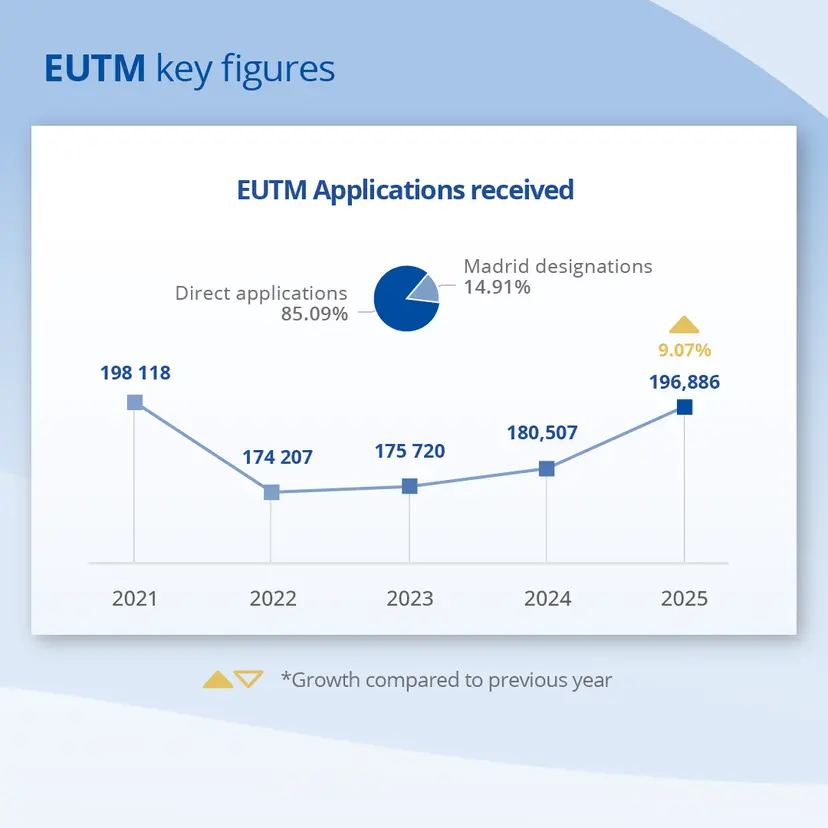
More applications mean less empty space
Naming often starts as a creative question. A new company needs a name. A merger needs one clear identity. A product launch needs a name that creates recognition and momentum.
A name does not enter an empty market. It enters a landscape of earlier registrations, similar sounds, related categories and existing trademark portfolios. As more trademarks are filed, the space around words, associations and naming territories becomes more densely occupied.
That changes how Naming & Branding should be approached. Name development cannot be reduced to a creative phase followed by a legal check. Legal availability shapes the strategic room in which names can be developed.
A name that feels original inside the company may look different once it is tested outside the room. The internal rationale explains why the name was chosen. The market responds to similarity, sound, memory and context. Trademark offices and opposing parties look at earlier rights, category proximity and likelihood of confusion.
That is where many naming risks begin.
3 criteria for a strong brand name
Naming rarely fails because there are no ideas. It fails more often because the strongest internal ideas are chosen before they have been properly tested.
A name can be strategically relevant and still be too descriptive to protect strongly. It can be short and memorable, yet too close to an existing trademark. It can work in one language and create friction in another market. It can support one product today and restrict the trademark portfolio tomorrow.
That is why a usable brand name must meet three criteria at the same time.
- It must fit strategically. A name has to take on the right role within the brand architecture. A corporate name, product name, subbrand or merger name each carries a different strategic responsibility.
- It must work linguistically and culturally. A name should be pronounceable, avoid unwanted meanings and avoid negative associations in the languages and markets where the brand is active or wants to grow.
- It must be legally defensible. A name in which a company invests should be protectable. Registration matters, but so does the ability to prevent competitors from moving too close to the name once it starts to build value.
That is why strategy, creative and legal need to meet early. Since 1989, Remarkable has worked at that intersection in-house, with experience across 3,000+ trademarks. The goal is not to make naming more cautious. The goal is to avoid building confidence around a name that cannot carry the business later.
A name must be able to carry growth
The pressure on naming becomes clearest when companies grow, merge or expand internationally.
Liantis was created after the merger of ADMB, Provikmo and Zenito, three established Belgian service providers for entrepreneurs and companies. The challenge was not simply to replace three names with one. The new name had to connect different histories, preserve trust among existing clients and create a clear platform for an integrated service offering. Liantis was developed from associations with “alliantie” and “liëren”, expressing connection, collaboration and support. Legal brand protection was part of the process, and Remarkable continues to support the trademark portfolio beyond launch.
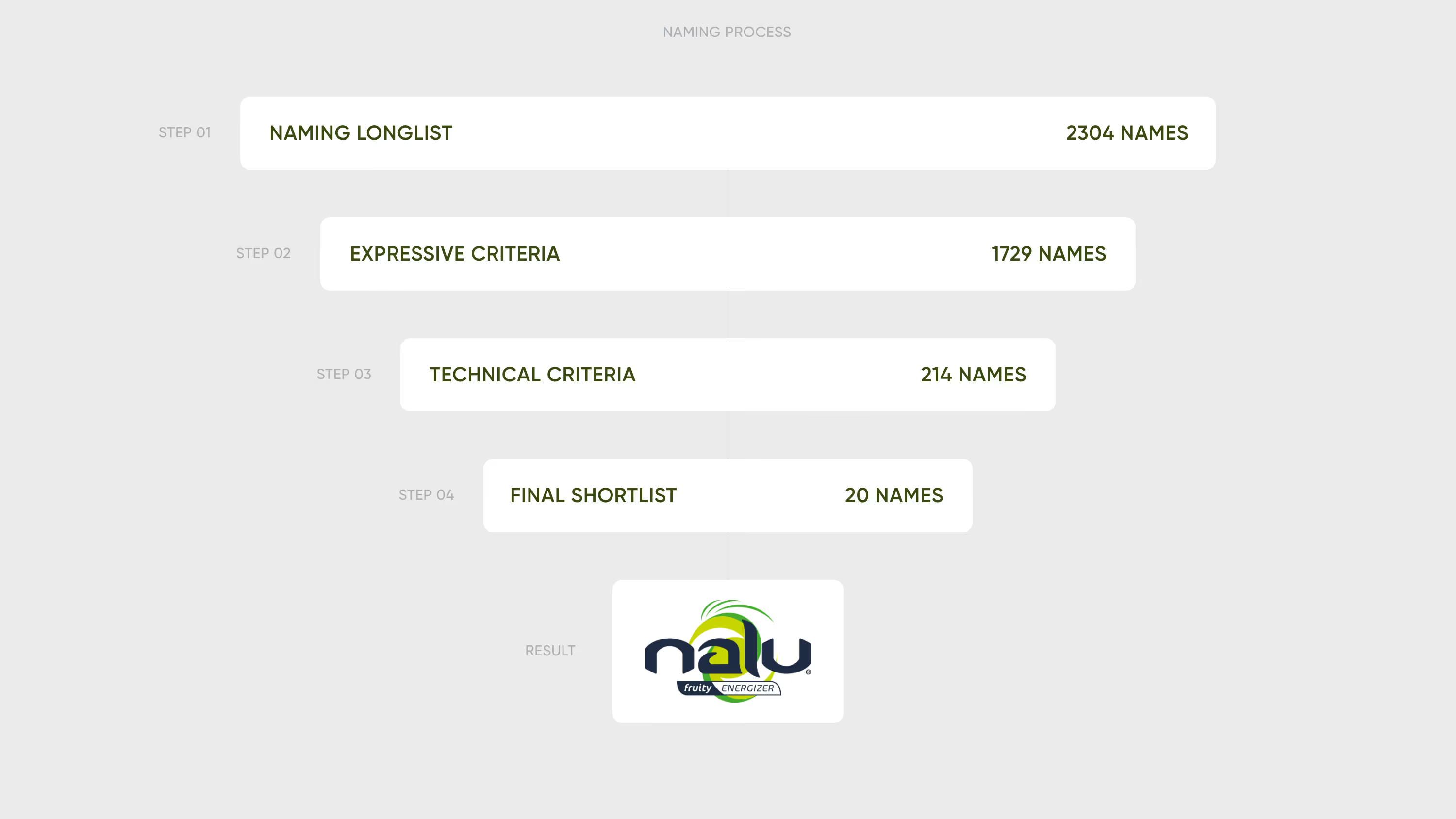
Nalu shows the same discipline in a different context. Coca-Cola wanted to launch an energy drink that moved away from the aggressive, performance-driven codes of the category. Remarkable created Nalu, inspired by the Hawaiian word for wave or wave movement. The name supported a fresher and more positive energy positioning, while remaining short, memorable and internationally usable. The process included product name development, market analysis, naming workshops and legal research.
In both cases, the name had to do more than identify. It had to carry positioning, language, distinctiveness and legal defensibility at the same time.
The cost of seeing naming risk too late
The cost of naming risk becomes visible when legal availability is assessed after the decision has already been made.
Microsoft experienced this with SkyDrive. The cloud storage service was eventually renamed OneDrive after a trademark dispute with British Sky Broadcasting, which argued that the name SkyDrive infringed its Sky trademark. Microsoft lost the case and announced the new name OneDrive in 2014.
The example matters because this was not a small company choosing a name without professional resources. It shows that even a major international player may have to revise a name when legal availability and brand protection leave insufficient room.
For many companies, such a correction is harder to absorb. Once a name has been chosen, the company quickly starts building around it. Identity, packaging, domain names, campaigns, internal alignment and sales materials begin to take shape. If the name later proves unavailable or legally weak, the correction is no longer only legal. It becomes strategic, operational and commercial.
That is why Legal Brand Protection should not sit at the end of the process. It helps determine which names are realistic before the company starts building on them strategically, creatively and financially.
A name is only strong when it can still be used tomorrow
The EUIPO figures confirm what many companies already experience in practice. Naming is becoming more crowded, more international and more legally sensitive.
AI can generate more suggestions. Workshops can produce more naming territories. Internal preference can create faster consensus. None of these things creates more trademark space.
The real discipline lies in selection.
A strong name is not the name that wins the room. It is the name that remains standing when strategy, language and legal reality meet.