Why city branding is rarely about marketing
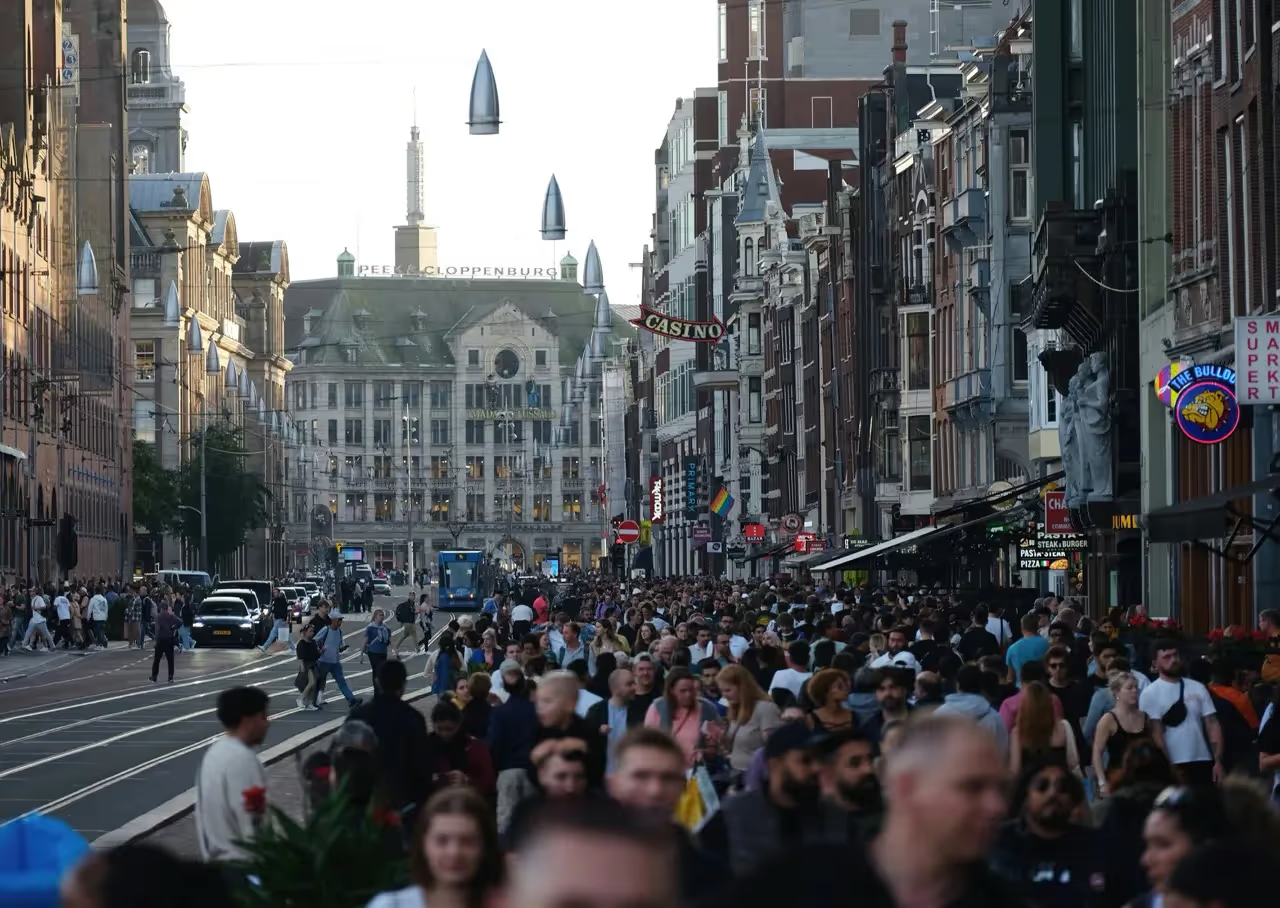

Cities are increasingly investing in logos, slogans and campaigns, often with the ambition to strengthen their international positioning and attract visitors, talent or investment. Yet the real challenge rarely lies in how a city presents itself visually or communicatively. The core question is different: what happens when a city no longer sees itself as a place, but as a brand that needs to be organised, managed and used?
A city is not a conventional brand
Unlike companies, a city has no clear owner, no single decision-making structure and no defined market in which it operates. A city brand is both shaped and influenced by residents, businesses, public authorities, visitors and international perception. Every branding decision therefore carries political, economic and societal implications.
That is precisely why city branding cannot be reduced to communication or promotion. At its core, it is a strategic question of positioning, structure and governance.
Where it often goes wrong
Many cities start their branding efforts from a perspective of visibility and recognition. A name, slogan or visual identity is developed and rolled out across communication channels, with the aim of creating a consistent and attractive image. While this often increases recognition, it rarely creates real coherence.
What is missing is an underlying strategic logic. What is the role of the city as a brand within a broader context? How does that role relate to stakeholders such as tourism, businesses and residents? Which initiatives belong under the same brand, and which should deliberately remain separate? Who decides on the use and evolution of that brand?
Without clear answers to these questions, what emerges is not a coherent brand, but a collection of initiatives that coexist without reinforcing each other structurally.
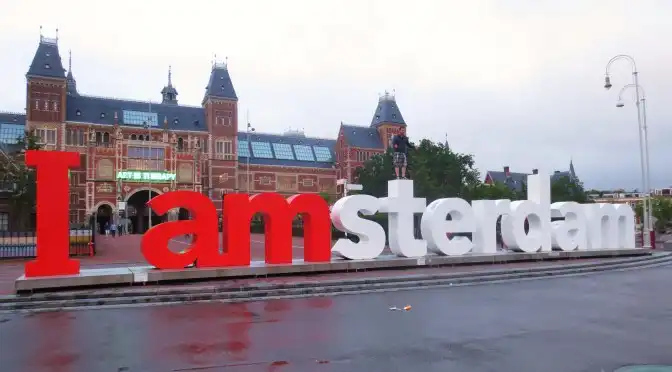
Amsterdam: a brand forced to correct its own success
“I amsterdam” became one of the most recognisable city branding initiatives in Europe, precisely because it succeeded in creating a simple and widely applicable brand layer. Its strength lay in its versatility: it was used for tourism, international positioning and economic development, allowing the brand to gain momentum quickly.
But that same success also exposed its limitations. The city’s increased attractiveness led to a surge in tourism, putting pressure on neighbourhoods, infrastructure and liveability. This forced policymakers to actively manage the type of visitors they attract and how they are distributed across the city.
What is striking is that this tension does not remain at policy level. It escalates. Residents have even taken legal action, arguing that the city is failing to adequately control mass tourism. The city brand thus shifts from a tool of attraction to a source of friction between reputation, liveability and governance.
A city brand that focuses purely on attractiveness will eventually collide with its own success if no structural choices are made about impact and boundaries. This is the point where city branding stops being a marketing issue and becomes a governance issue.
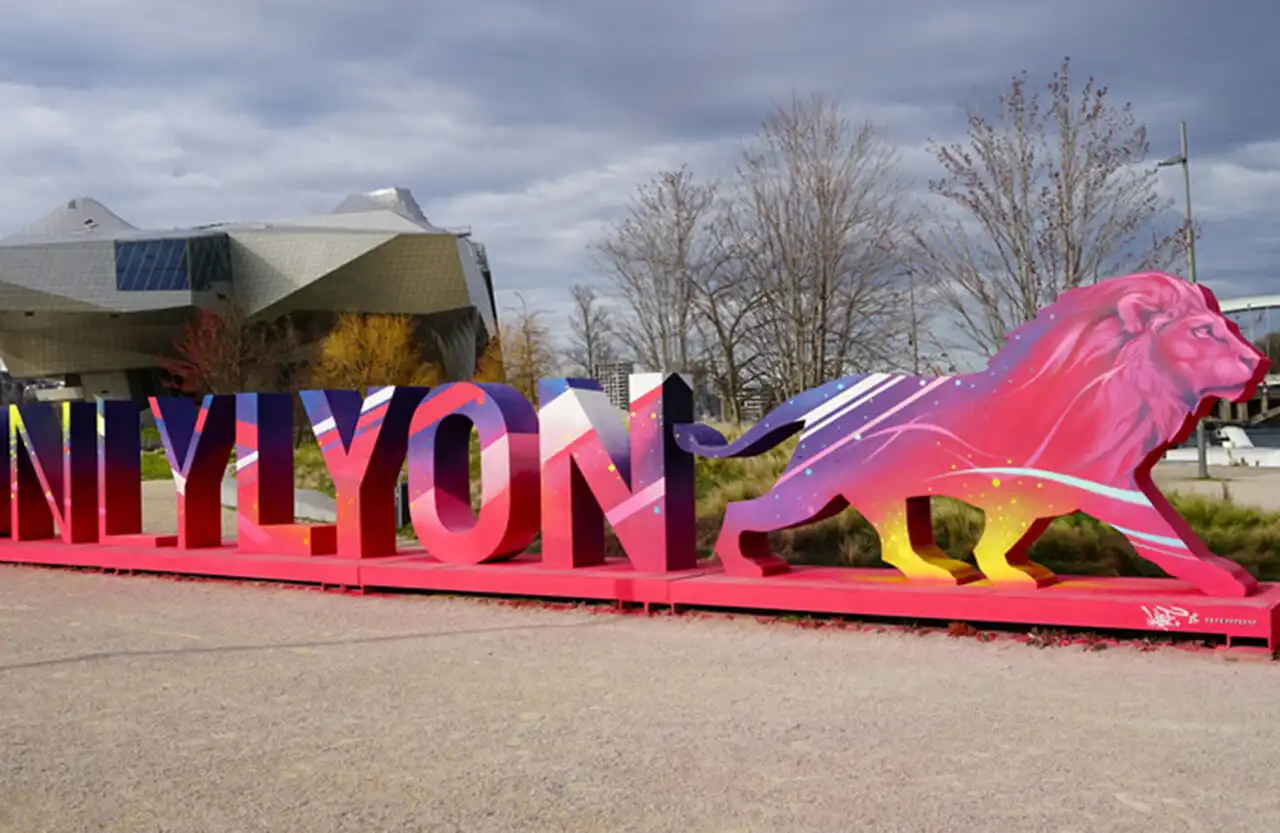
Lyon: a brand deliberately structured
Lyon takes a fundamentally different approach by treating city branding not as a campaign, but as a structured brand platform. With ONLYLYON, the city has developed a brand that is not only visible, but actively used by a network of public and private partners in their own activities.
The brand supports international positioning, economic development and city diplomacy, but always within a clear structure and with defined roles. Its use is not informal, but embedded in a system of collaboration and governance.
As a result, the brand does not sit on top of the city as a communication layer, but functions as an instrument that actively shapes its development and positioning.

From communication to structure: the Meetjesland case
This tension is not new. As early as 2006, we worked on the development of the Meetjesland brand, where the challenge was not to design a logo, but to translate a regional identity into a usable and widely supported brand.
The core of that process was the definition of a “core brand” and the development of a strategic foundation that could be applied across different stakeholders and use cases. This is where the shift becomes clear: as soon as multiple parties need to use the same brand, the question automatically moves from communication to structure.
The real issue: lack of structure
Cities rarely fail because they lack visibility, but because they lack structure in how their brand is organised and used. A city is rarely a single brand. It is a layered system of brands and initiatives, including the city as an overarching brand, tourism positioning, economic and investment initiatives, cultural and societal projects and regional collaborations.
When these layers are not explicitly structured, overlap and internal competition arise, weakening rather than strengthening the brand. City branding is then reduced to communication without direction.
The underestimated risk: loss of control
Once a city actively uses its name and identity as a brand, a degree of control is inevitably lost. Companies start using the name in their own communication, initiatives leverage the reputation and external parties give their own interpretation to the brand.
Unlike companies, this control is difficult to define legally. Slogans are often too descriptive to be strongly protected, city names are inherently generic and widely used and symbols often have a public status, making protection more complex.
As a result, a city brand is more likely to dilute than to be deliberately strengthened, especially in the absence of clear agreements and structure around its use.
Conclusion
City branding is not about how a city presents itself, but about how it organises itself as a brand. Without explicit choices regarding positioning, brand architecture and governance, any initiative remains dependent on communication, and therefore temporary, or even counterproductive when initiatives start to conflict.
For cities aiming to grow internationally, the challenge is not visibility, but the organisation, structuring and protection of their brand. That is where city branding truly begins.